applaud vs. Birdeye
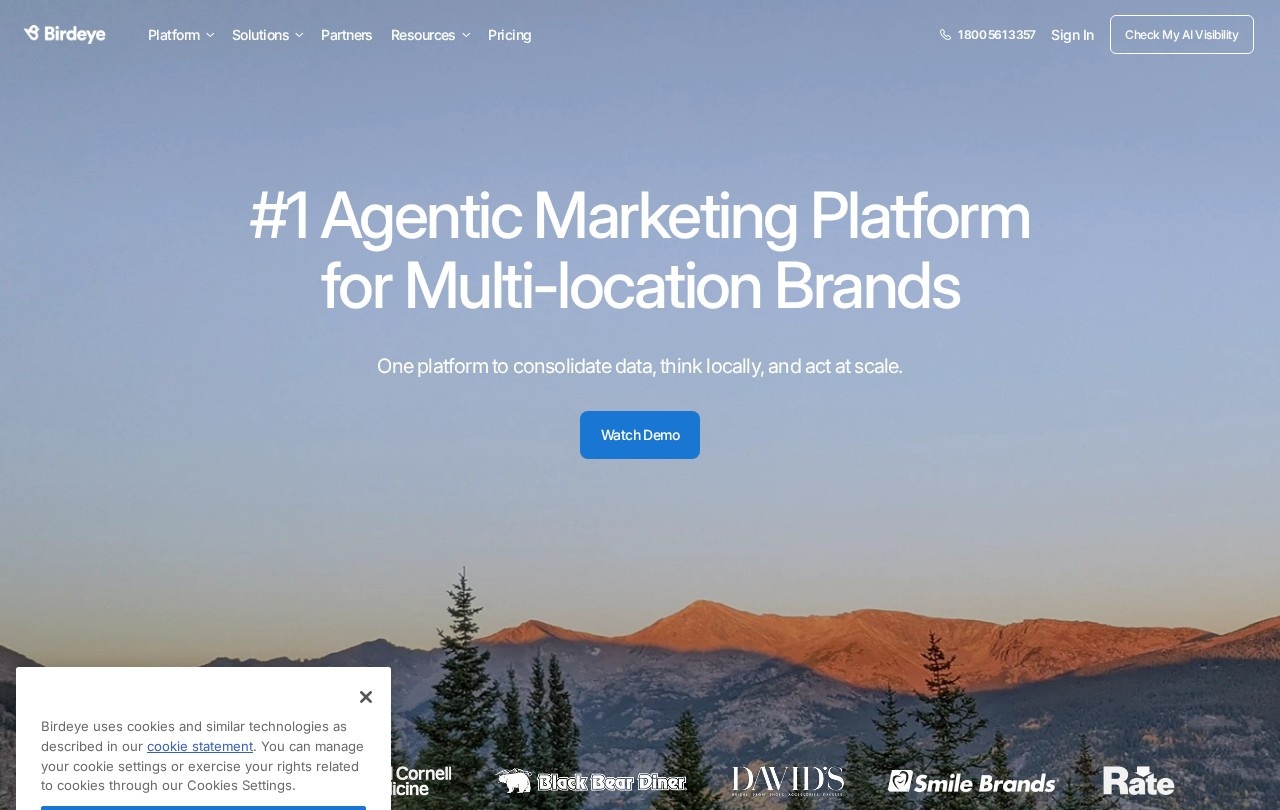
Birdeye built the biggest reputation-management stack on the market. It’s wide, polished, and priced for the enterprise. It is also a software-only review motion — the same one-shot SMS or email that everyone else ships.
- Founded
- 2012
- HQ
- Palo Alto, CA
- Pricing model
- Annual SaaS contract, per-location, commonly $300–$1,500/month
- Audience fit
- Multi-location service businesses that want one dashboard for listings, reviews, surveys, and CX
Quick verdict
Birdeye is the most feature-complete reputation platform on the market. If your practice wants a single dashboard that touches listings, reviews, surveys, social, and CX analytics, Birdeye covers more ground than anyone else. The trade-off is that it’s a software tool — not a review-collection service. The mechanic underneath the dashboards is the same one-shot automated ask the rest of the industry ships, which is where the conversion ceiling lives.
Who Birdeye is
Birdeye launched in 2012 out of Palo Alto and grew into the category leader for “experience marketing.” They raised substantial venture capital, expanded aggressively into enterprise verticals, and built the broadest reputation-management product on the market — Reviews, Listings, Surveys, Inbox, Social, Insights, and a stack of AI-assisted features bolted on more recently.
The buyer profile is typically a multi-location operator with internal marketing capacity. Birdeye sells well into regional dental groups, MSOs, automotive, real estate, and hospitality. Implementation is sales-led and usually closes on an annual contract.
How they actually work
Under the dashboards, Birdeye’s review-collection motion is the standard industry pattern: when a visit closes (via a PMS hook, a Zapier trigger, or a manual upload), the platform fires an automated SMS and/or email to the patient asking for a review, linking out to Google or the destination of choice. There may be a follow-up nudge a few days later. That is the entire mechanic.
Everything else in the product — the AI summarisation, the listing manager, the survey builder, the competitor benchmarking — sits around that core ask. None of it changes the conversion ceiling, because none of it changes how the ask itself is delivered.
Where Birdeye is strong
- Breadth. No competitor covers as many surfaces. If you need listings + reviews + surveys + social + CX from one vendor, this is the platform.
- Integrations. Most major PMS, CRM, and practice-management systems have a published Birdeye integration. Data plumbing is well-trodden.
- Dashboards and reporting. Enterprise-grade roll-ups across locations, with NPS-style scoring and trend views. Useful for operations leaders who need to brief a board.
- AI features. Auto-generated review responses, sentiment analysis, and competitive intelligence. The execution is reasonable.
Where Birdeye falls short
- The mechanic still maxes out around 5%. A one-shot SMS or email — however well-timed — is the industry passive baseline. BrightLocal’s recurring consumer-review benchmarks have put healthcare-adjacent conversion in single digits for years.
- Monthly retainer regardless of volume. You pay the same in a quiet month as a busy one. There is no outcome-based component to the pricing.
- Software-only — no human callers. The difference between a real person checking in on a visit and an automated text is the difference between a 30% and a 5% conversion. Birdeye does not staff humans on this leg.
- Aggressive sales motion. Multiple public reviews on G2 and Capterra describe pressured renewal cycles and difficulty exiting annual contracts. Worth verifying in their current G2 listing before signing.
- Dashboard fatigue. Practices commonly report that nobody on the team logs in after onboarding. The platform’s breadth turns into shelf-ware unless there’s a dedicated owner.
- Review-gating exposure. Some of Birdeye’s historical survey + outreach configurations have allowed routing patients to private feedback channels ahead of public review prompts. The FTC’s rule on consumer reviews (16 CFR Part 465) frames any satisfaction-conditional public-review prompt as a compliance risk. Confirm Birdeye’s current product configuration before relying on it.
The applaud difference
applaud doesn’t sell software. We sell posted public reviews, priced on outcomes, billed only when one goes live. The mechanic underneath is a real human caller — backed by SMS and email — reaching out after the visit, within the window when patients still remember the appointment but have stepped out of the clinical context.
That single design choice — a person on the phone, not a template in an inbox — is the difference between ~5% conversion on a Birdeye-style passive ask and the ~30% conversion applaud sees across our active accounts. Roughly 6× the yield per completed visit, on the same patient list, against the same Google profile.
The numbers, side-by-side.
Same patient, same Google profile, same week — here’s where the two products diverge.
| Dimension | Birdeye | applaud |
|---|---|---|
| Engagement model | Software-only — automated SMS + email asks | Human-sounding voice + SMS, done-for-you |
| Prospect-to-review conversion | ~5% (industry passive baseline) | ~30% |
| Pricing model | Annual SaaS, per-location retainer | Priced on outcomes, not seats |
| Approx. monthly cost | ~$300–$1,500 / month / location | Zero base — pay only on outcomes |
| BAA / HIPAA | Available, often at a higher tier | Standard, on every account |
| FTC review-gating risk | Historically offered satisfaction-routing features — verify current product | None — every patient gets the same invitation |
| Setup friction | Multi-week onboarding, sales-led implementation | Free done-for-you setup |
When to pick Birdeye over applaud.
If you operate 50+ locations across multiple service verticals and you need a single dashboard for listings, reviews, surveys, social, and CX analytics, Birdeye’s breadth will fit better than applaud’s done-for-you model. applaud doesn’t pretend to be a CX platform — we’re single-purpose: more posted public reviews, per visit. If you’ve already standardised on a Birdeye-style consolidator and review velocity is just one of many things you measure, applaud can sit beside it rather than replace it.
Want a real comparison against your current setup?
Twenty minutes. We’ll audit your current review velocity — whatever platform you’re on — and tell you honestly whether applaud fits.